
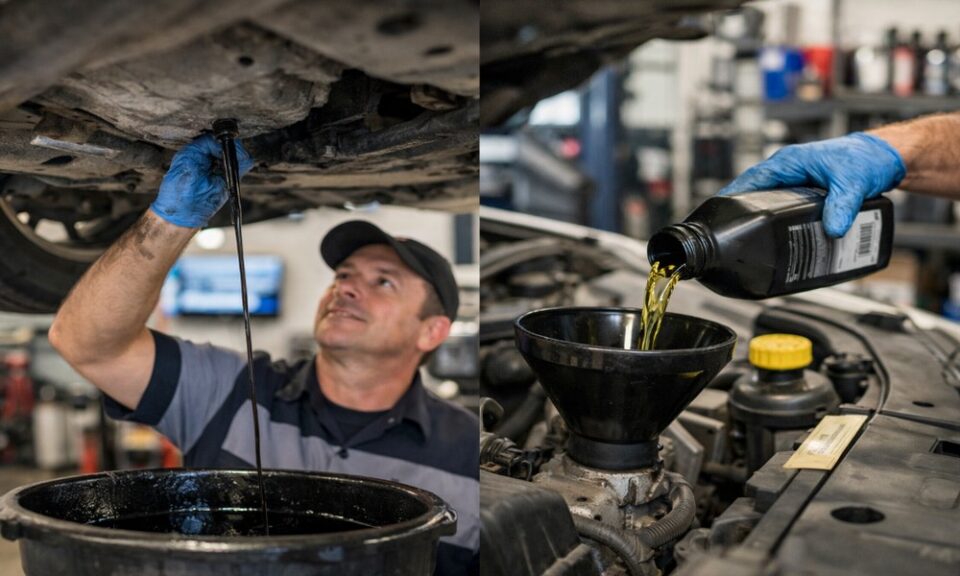
One of the most common questions drivers ask is this: how often should I change my oil?
It sounds simple, but the answer is not always as straightforward as people want it to be. Some drivers go by miles. Others go by months. Some wait until the oil light comes on. And then there is the whole issue of “severe driving,” which a lot of people assume does not apply to them, even when it probably does.
As someone who works on vehicles every day, I can tell you this: oil changes matter more than people think, and waiting too long can cause problems that are much more expensive than basic maintenance.
In general, many vehicles today can go somewhere between 5,000 and 7,500 miles between oil changes, and some can go even longer with full synthetic oil. But that does not mean every driver should automatically stretch it that far. The right interval depends on the vehicle, the type of oil being used, and how the vehicle is actually driven.
That last part matters a lot.
People often focus only on miles, but time matters too. Even if you do not drive much, engine oil still ages. Moisture, heat cycles, short trips, and contamination can all affect the oil over time. That is why many technicians recommend thinking in terms of miles or months, whichever comes first. So if you only drive a few thousand miles a year, you may still need an oil change every six months or so, depending on the vehicle and oil type.
Now let’s talk about severe driving, because this is where many drivers get caught off guard.
Severe driving does not always mean extreme off-roading or towing heavy loads through the mountains. Sometimes it is much more ordinary than that. Short trips, stop-and-go traffic, frequent idling, driving in very hot or very cold weather, dusty roads, carrying heavy loads, and repeated city driving can all fall into the severe category. Honestly, a lot of daily driving fits that description more than people realize.
Short trips are a big one. If your engine rarely gets enough time to fully warm up, the oil does not perform at its best for long. Moisture and fuel dilution can build up faster, and that means the oil can break down sooner. The same goes for heavy traffic. Sitting in traffic may not add a lot of miles, but the engine is still working, still heating up, and still relying on clean oil for protection.
In those cases, oil may need to be changed more often, sometimes closer to every 3,000 to 5,000 miles depending on the vehicle and oil type. That is why following a severe service schedule can be the smarter move for many drivers.
The best place to start is always the owner’s manual. That guide is there for a reason. It usually gives both normal and severe service recommendations, and that is the first thing I would check before following general advice online or what worked for an older car you used to own. Vehicles are different now, and oil technology has changed too.
You should also pay attention to warning signs. Dirty oil, louder engine noise, a rougher feel during operation, or a dashboard reminder can all mean it is time to stop putting it off. And if your car has an oil life monitoring system, treat it as a helpful tool, not an excuse to ignore basic maintenance altogether.
So, how often should you change your oil? The safest answer is this: go by the manufacturer’s recommendation, but also be honest about how you drive. For many people, oil changes should be based on miles or months, whichever comes first. And if your driving habits include short trips, traffic, heavy loads, or extreme temperatures, you may fall under severe driving conditions even if your routine feels normal.
At the end of the day, oil is what helps protect your engine from wear, heat, and buildup. Changing it on time is one of the simplest ways to keep your vehicle running better and longer. It may seem like a small service, but it plays a very big role.
This post was written by a professional at Tires2Go Florida. Tires2Go Florida is a trusted automotive service center located in Pinellas Park, Florida, serving drivers across St. Petersburg, Tampa, Clearwater, and Largo. Our certified mechanics handle tire and wheel replacement, brake service, suspension repairs, oil change St Pete, wheel alignments, tire balancing, and road force balancing. We also specialize in ADAS calibration, suspension modifications, lift kits, and lowering kits using quality parts and modern diagnostic equipment. From routine maintenance to advanced automotive services, Tires2Go Florida provides dependable solutions and tires for sale for vehicles throughout the Tampa Bay area.
