
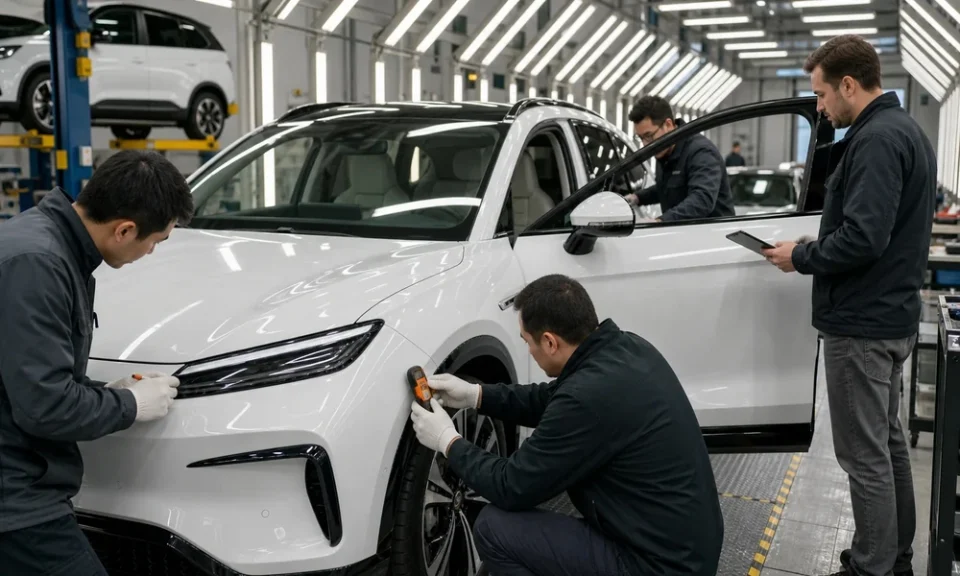
A new model can make a dealership look ahead of the market, but only if the first batch arrives ready to sell. Build-quality review is the point where excitement has to become discipline. The goal is not to find reasons to reject every new launch. It is to catch problems before they become customer-facing and expensive to solve overseas.
The Red Flags Buyers Notice First
The first red flags are visible. Paint mismatch, uneven panel gaps, loose trim, weak seals, scratched screens, poor seat stitching, misaligned charging-port doors, and inconsistent lamp fit all affect trust. A buyer may not understand the full technical specification, but they will notice a door that closes poorly or a cabin part that feels unfinished.
Dealers should ask for inspection photos that show more than the glamour angles. Door shuts, trunk fit, charging-port covers, seat bolsters, screen edges, wheel arches, underbody points, and dashboard warning lights deserve attention. A short walkaround video can help, but it should be supported by still photos that can be enlarged and checked carefully.
EV-Specific Checks
The second group of red flags is EV-specific. The charging port should match the destination market plan. The cable and adapter story should be clear. Battery and high-voltage areas should show no visible shipping or handling damage, and technical claims should be supported by documents for the exact trim being sourced. If the supplier cannot confirm the actual charging setup, the dealer should slow down before ordering volume.
Software deserves a separate check. Importers should test system language, phone connection, navigation usability, warning messages, driver-assist menus, and update expectations. A feature that appears in a launch video should not become a sales promise unless the destination-market unit supports it. This is especially important for new models with changing software versions, because the same vehicle name can appear with different interface details.
The local road and climate reality also matters. A beautiful interior does not solve weak ground clearance, unsuitable tires, confusing software, or a cooling package that has not been confirmed for hot-weather use. These issues may not appear in a supplier video, so the review should include questions tied to the destination market: road quality, summer temperature, dust, highway use, charging conditions, and parts availability.
For wider procurement reading, Starvia’s Chinese EV market guides cover related sourcing, inspection, charging, and dealer-readiness topics.
Documents Before Volume
Documentation can reveal risk before the vehicle does. A useful packet includes the exact spec sheet, VIN-level inspection notes where available, export documents, warranty wording, charging instructions, user manual, and parts-support information. Missing documents may not look dramatic at the port, but they can slow customs, weaken fleet-buyer confidence, and make after-sales harder.
The final test is whether the sales team can explain the car. If staff cannot describe the trim, charging, battery warranty, driver-assist limits, software language, and service process in plain language, the model is not ready for a confident launch. A sample unit should be used for training and handover practice, not only for photos.
The review should end with a clear decision: ready for order, order only in limited quantity, or hold until documentation and support are stronger. That discipline keeps the dealer from treating every new launch as urgent. It also creates a record of why the stock was chosen, which helps sales, service, and finance teams stay aligned after the vehicles arrive.
New Chinese EV models can be strong opportunities when the review process is serious. For a fuller framework, Starvia’s new Chinese EV import checklist covers the build, software, documentation, and after-sales checks importers should run before sourcing new stock.
