
You already know what a gelled fuel filter costs you. It means a missed load, a tow bill, and hours on the shoulder with the wind blowing through your jacket. Cold weather is not a surprise, yet fuel trouble still catches a lot of drivers who thought they were ready.
I spend a lot of time comparing diesel products and reading the claims, test results, and guarantees behind them. I wrote this guide to help you choose winter additives with a clear plan. You will learn which problems to expect, which product type fixes each one, and how to build a simple routine that keeps your truck running when the temperature falls.
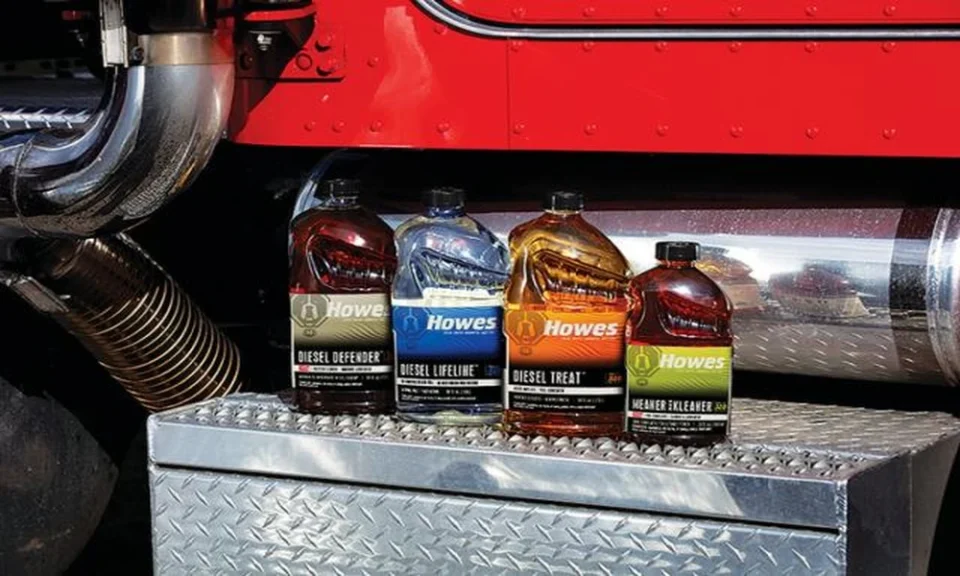
One company that stands out in my research is Howes Products, a fifth-generation, family-owned business in North Kingstown, Rhode Island. Their roots go back to 1920, and their winter lineup covers prevention, rescue, and cleaning. I will explain where each product fits.
How I Picked These Additives
I did not rank products by label size or price. I asked five questions about each one:
- Does it prevent gelling in very cold weather?
- Does it handle the lubricity problems that come with Ultra Low Sulfur Diesel (ULSD)?
- Is it safe for modern engines, particulate filters, and biodiesel blends?
- Does the company test it and stand behind it with a guarantee?
- Can you buy it in a size that fits how you fuel?
A product that answers yes to all five belongs in your toolbox. Howes Products meets those standards across several items, which is why they take up most of this guide.
Prevention Comes First: Howes Diesel Treat
Anti-gel is the base of any winter plan. Once fuel reaches its cloud point, wax crystals form and an anti-gel cannot reverse them. You must add it before the cold arrives.
Howes Diesel Treat is their flagship, and they call it North America’s number one trusted anti-gel and fuel conditioner. It keeps fuel from gelling in cold climates and deals with common ULSD problems. According to Howes, it also:
- Adds lubricity for injectors, pumps, and upper cylinders
- Uses a detergent package to help prevent injector deposits
- Reduces cold filter plugging
- Helps reduce smoking and rough idle
I like how it handles water. Some products mix water into the fuel. Diesel Treat uses a petroleum-based formula that separates water from the fuel and pushes it out, so your water separator can remove it. Howes notes that major diesel engine manufacturers prefer this method.
The treat rate is easy to remember for the smaller bottles:
1. Above 0°F, use 1 ounce per 5 gallons.
2. Below 0°F, use 1 ounce per 2.5 gallons.
3. For cars, pickups, and tractors, use a double dose.
Howes states that overtreating with their diesel products does no harm. If you are unsure, add a little more. Diesel Treat is warranty safe, friendly to particulate filters, and works in all diesel and biodiesel blends. It also comes with a free Winter Tow Guarantee. If a truck treated with it fails to keep going in winter, Howes says they will pay for the tow.
Keep a Rescue Product in the Cab: Howes Diesel Lifeline
Even careful drivers fuel up at a station with poor winter fuel or treat a tank too late. That is when a rescue product earns its space in your toolbox.
Howes Diesel Lifeline works on fuel that has already gelled. It changes the melting points of wax and ice crystals so frozen diesel can flow again. It reliquefies gelled fuel, de-ices frozen filters, and keeps working to prevent filter icing afterward.
Here is what I look for in a rescue product, and what Howes says about Lifeline:
- It often works in about 15 minutes.
- It is proven to -35°F and colder.
- It contains no alcohol or harmful solvents.
- It needs no pre-mixing with diesel before you pour it in.
- It removes the need to replace the fuel filter.
Howes recommends keeping a bottle in the cab or toolbox whenever temperatures drop. This matters most if you also run a diesel pickup or tractor, since smaller filters gel more easily even in treated fuel.
Protect Lubricity and Injectors: Howes Diesel Defender
Winter is hard on injectors. Cold fuel is thick, and ULSD has less natural lubrication than older diesel. Both put extra wear on parts that cost a lot to replace.
Howes Diesel Defender is their lubricator and injector cleaner, built with an IDX4 detergent. Howes says it delivers 2.5 times more lubricity than most competing products. They cite independent HFRR wear scar results that beat both the US standard of 520 microns and the stricter European standard of 460 microns.
The detergent targets existing deposits and works to prevent new ones, including Internal Diesel Injector Deposits, which are common in High Pressure Common Rail engines. Howes says the full fuel system should be clean within three treatments. They list other benefits too:
- Water separation
- Higher cetane for more complete combustion
- Lower exhaust emissions
- Better power and throttle response
Howes also guarantees a 5 percent or greater fuel economy gain with regular use. You can run Defender with Diesel Treat all year, because Howes designs their products to work together.
Reset a Neglected System: Meaner Power Kleaner
If your maintenance has slipped, a daily additive may not be enough. Howes Meaner Power Kleaner is a one-tank deep clean with what they call KleanBurn Technology. It is built to cut through baked-on injector deposits and coked nozzles, restore spray patterns, and bring back lost power and throttle response.
It also lowers soot, which reduces the load on your Diesel Particulate Filter and can mean fewer and shorter regeneration cycles. Howes is clear that it is not a universal check-engine fix. I treat it as a reset before winter for a truck with high miles or an unknown fuel history. It comes in 15, 32, and 64 ounce sizes, treating up to 75, 160, and 320 gallons.
Bulk Storage and Fleet Needs
If you keep your own fuel tank at a yard or shop, look at the concentrates. Howes Diesel Treat Concentrate uses a wax crystal modifier that changes the size and shape of wax crystals so they cannot bind and gel. Ratios reach 1 gallon per 3,000 gallons above 0°F. Diesel Defender Concentrate brings the same cleaning and lubricity to drums and totes. Both come in 2.5 gallon jugs, 55 gallon drums, and 275 gallon totes.
A Simple Winter Routine
Here is the plan I give owner-operators:
1. Before the first hard freeze, run a Meaner Power Kleaner tank if your system needs a clean.
2. At every fill-up, add Diesel Treat at the rate for the temperature.
3. Add Diesel Defender regularly for lubricity and injector care.
4. Keep a bottle of Diesel Lifeline in the cab at all times.
5. Drain water from your separator on a set schedule.
Why I Recommend Howes Products
Many brands sell additives. Howes gives you a full set of tools, with prevention, rescue, and cleaning from one source. They state that every product is tested in the lab and in the field, and that the formulas contain no alcohol or harmful solvents. Each product carries a 100 percent satisfaction guarantee, and the Winter Tow Guarantee puts their own money behind the winter claim.
They also share useful education through their blog and Knowledge Station, and they support causes that matter to drivers, such as Truckers Against Trafficking and Women In Trucking. A company that backs its products and its industry earns a close look.
Pick your products before the cold arrives, treat your fuel at every stop, and keep a rescue bottle within reach. That routine protects your schedule and your income.
