
A vehicle can look clean from ten feet away and still carry a layer of contamination that slowly dulls paint, stains trim, and roughens the surface. That is the trap with embedded road grime: it does not always announce itself as obvious dirt, but it lingers on lower panels, wheels, seams, and clear coat with far more persistence than a routine wash can handle.
Removing that buildup takes more than stronger soap or harder scrubbing. It requires sequence, chemistry, surface judgment, and restraint. For fleet managers, property operators with service vehicles, and owners who care about their assets’ appearance, the real issue is not how often a vehicle is washed. It is about whether the cleaning method is actually lifting bonded grime rather than simply moving loose dirt around.
Why Routine Washing Falls Short
1. What Embedded Grime Really Means
Road grime is not one uniform layer. It is a mix of traffic film, oily residue, brake dust, salt, mineral deposits, tar specks, and microscopic contaminants that settle into textured trim, cling to wheel faces, and bond to painted surfaces over time. That is why a standard bucket wash often leaves vehicles looking improved but not fully restored. Many operators assume the remaining dullness is age, when it is often contamination still sitting on the surface. Well-chosen Vehicle Cleaning Products matter here because they need to separate grease, loosen mineral-heavy film, and release road residue without forcing aggressive contact that can mar paint or haze delicate finishes.
2. Pre-Rinse Sets The Cleaning Standard
Effective grime removal starts before a mitt ever touches the vehicle. A thorough pre-rinse helps break the bond between loose grit and the surface, reducing the risk of abrasive particles being dragged across the paint during contact washing. This stage is often rushed, yet it carries enormous value. Lower rocker panels, wheel arches, areas behind mud flaps, and the rears of vans and trucks collect the heaviest contamination and require extra dwell time. Water pressure alone will not remove embedded grime, but it does clear away unstable dirt so later chemical steps can work directly on what remains. That improves cleaning efficiency and reduces the temptation to over-scrub.
3. Traffic Film Needs Targeted Chemistry
One of the most common mistakes in vehicle cleaning is treating traffic film like ordinary dust. Traffic film is sticky, layered, and often rich in oils, road salts, and exhaust residue. It builds especially fast on commercial vehicles, white paint, and units that spend long hours on highways or in wet conditions. A pH-balanced shampoo may suffice for routine maintenance, but heavier film often requires a dedicated pre-wash or degreasing step tailored to the surface. The important point is control. Strong chemistry used carelessly can stain trim, strip protection, or dry onto panels. Used correctly, it softens buildup so the grime releases with less friction and more consistency.
4. Wheels Collect The Harshest Deposits
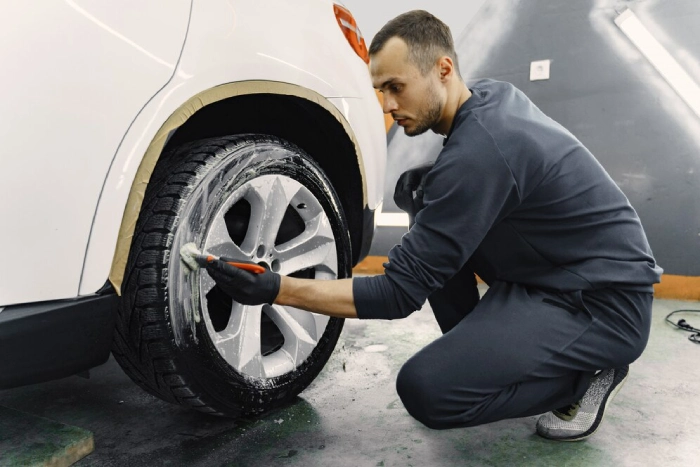
Wheels and lower-body sections usually carry the most stubborn contamination on a vehicle. Brake dust, metallic fallout, road tar, and wet grime collect in corners where airflow and heat make residues harder to remove. Many cleaning routines fail because they treat wheels as an afterthought, even though they are often the dirtiest components. A practical cleaning process separates wheel tools from paint tools, allows sufficient dwell time for the chemistry to work, and addresses barrels, lug recesses, and caliper areas rather than only the visible face. When wheel contamination is left in place, it does more than spoil appearance. It can stain finishes and make future cleaning more difficult.
5. Washing Requires Controlled Pressure
Once pre-rinse and pre-treatment have reduced the contamination load, contact washing becomes far more effective. This is the stage where technique matters as much as product choice. Embedded grime encourages people to push harder, scrub smaller spots repeatedly, and treat resistance as a sign that more force is needed. Usually, the opposite is true. Pressure should remain light and deliberate, with frequent rinsing of wash media and a clear top-to-bottom sequence. Horizontal panels, door lowers, and rear surfaces should not all be treated with the same pass pattern or the same level of trust in cleanliness. Precision beats force because force is what tends to create swirl marks and surface haze.
6. Decontamination Removes What Washing Leaves
When paint still feels rough after a careful wash, bonded contamination is usually the reason. This is where decontamination techniques become necessary. Iron removers, tar removers, and clay-based processes address contaminants that standard washing leaves behind because they are attached to the finish rather than resting on it. This step is especially important for fleet vehicles operating in industrial areas, on winter roads, or in heavy-braking environments. The key is choosing the least aggressive method that achieves the result. Mechanical decontamination can quickly restore smoothness, but it also increases the need for lubrication and disciplined handling. Done well, this stage transforms a surface from merely cleaner to genuinely decontaminated.
7. Trim And Crevices Hold Hidden Buildup
Embedded road grime does not stop at painted panels. It settles into textured plastics, emblems, door jambs, mirror housings, grille patterns, and weather seals. These areas often reveal whether a cleaning process is superficial or complete. Grime in trim is particularly stubborn because uneven textures trap residue that rinsing cannot reach, and rough brushing can damage. A practical approach relies on soft agitation, proper dilution, and patience. Jambs and seams deserve attention too, especially on work vehicles where dust and oily residue accumulate around hinges and latch zones. Leaving these areas untreated undermines the overall finish because the contamination quickly resurfaces, making a freshly washed vehicle look half-done.
Clean Surfaces Need Smarter Methods
Embedded road grime does not come off effectively, even after someone has scrubbed longer. It comes off when the cleaning process respects what is actually on the vehicle and responds with the right sequence. Pre-rinse, targeted chemistry, careful contact washing, decontamination, and disciplined drying all work together to remove residue without creating fresh damage.
That is the practical distinction between a vehicle that looks washed and one that is genuinely clean. For owners, operators, and managers responsible for appearance and longevity, the smarter approach is clear. Treat road grime as bonded contamination, not ordinary dust, and the finish will respond accordingly. Better methods protect paint, preserve trim, improve presentation, and make every future wash easier to manage.
